Sarnia Tree Removal Experts Available
You'll want Parkhill arborists familiar with Sarnia's environmental challenges, soil types, and utility constraints. We implement ISA A300/ANSI Z133, industry-standard traffic management, and use calibrated diagnostics (resistograph, moisture, thermal) to evaluate, trim, or securely extract with certified equipment and safety gear. Rely on comprehensive care protocols, safety perimeters, and chipper/stump grinder placement that protects property and people. Ready for emergency response 24/7 get more info with location-monitored teams, we record imagery, hazard assessments, and comprehensive care strategies. Read on to discover the ways we safeguard your assets.
Essential Points
- Professional Sarnia arborists handling lake-effect winds and clay soils, addressing drainage requirements and utility clearances for safe and compliant tree services.
- ISA-compliant assessments utilizing resistograph testing, soil analysis, and risk analysis matrices to evaluate and determine problems and formulate precise care plans.
- Specialized pruning and canopy care that preserves tree structure, restricts live foliage removal to twenty to twenty-five percent, and enhances weather resistance.
- 24-hour emergency assistance with GPS-tracked teams, featuring specialized gear, secure tree elimination, complete stump grinding, and thorough site cleanup.
- We operate with full insurance coverage and follow CSA/ANSI standards, employing safety-certified tools, detailed safety programs, and transparent documentation for homeowners and their insurance companies.
The Value of Local Tree Experts for Sarnia Properties
As trees adapt to site-specific conditions and microclimates, professional arborists provide the local expertise Sarnia properties need for proven, secure tree maintenance. You get professionals who understand shoreline weather impacts, clay‑rich soils, water flow challenges, and infrastructure clearances typical in your neighborhood. They calibrate maintenance timing, equipment setup, and debris management to prevent damage to property, people, and infrastructure.
Regional knowledge strengthens compliance. Certified arborists match their guidance with local regulations, power line safety standards, and environmental protection schedules. Through community engagement, they share safety notification procedures and coordinate neighborhood-wide safety measures after storms. Their seasonal insights help you predict ice-load failures, pest infestations, and drought stress, so you can arrange preventive measures before problems escalate. You receive targeted, defensible actions that protect tree health and location security.
Comprehensive Tree Health Assessments and Care
We start with a thorough tree health evaluation that combines visual inspection, diagnostic tools, and site data. We maintain records of species identification, age assessment, exposure conditions, and soil analysis, then execute root collar examinations to identify root girdling, deterioration, and elevation variations. Employing resistograph readings, moisture meters, and chlorophyll fluorescence, we measure structural and physiological stress.
We provide periodic evaluations specifically designed for Sarnia's climate: spring growth and tissue evaluations, summer foliage nutrient assessment, fall root-zone respiration tests, and winter bark and canker inspections. We analyze soil for pH levels, electrical conductivity, compression, and harmful microbes, and create risk assessment maps based on ISA best management practices. Care plans detail proper root zone aeration, organic cover levels, water management, PHC applications, and stem preservation methods to reduce hazard potential and maximize tree longevity.
Precision Pruning and Canopy Management
Optimize strength and protection with pruning techniques that focus on tree biology and weight distribution, not just visual appeal. You'll decrease failure risks by performing cuts at the branch connection, protecting compartmentalization and vascular flow. Initiate with a detailed tree inspection: detect co-dominant stems, stretched laterals, and imbalanced crown sections. Utilize crown balancing techniques to even out weight, decreasing rotational pressure during wind events. Perform strategic thinning-avoiding extreme interior stripping-to protect inner canopy, improve ventilation, and reduce wind resistance without triggering excessive growth.
Establish quantifiable boundaries: prune no more than twenty to twenty-five percent of live foliage per maintenance cycle, keep at least 33% branch diameter at attachment points, and maintain clearance specifications around buildings and power lines. Prioritize deceased branches, rubbing limbs, and unhealthy tissue. Record growth response and plan revisits on a three to five year cycle to sustain proper structure, light penetration, and storm resistance.
Professional and Reliable Tree Elimination Operations
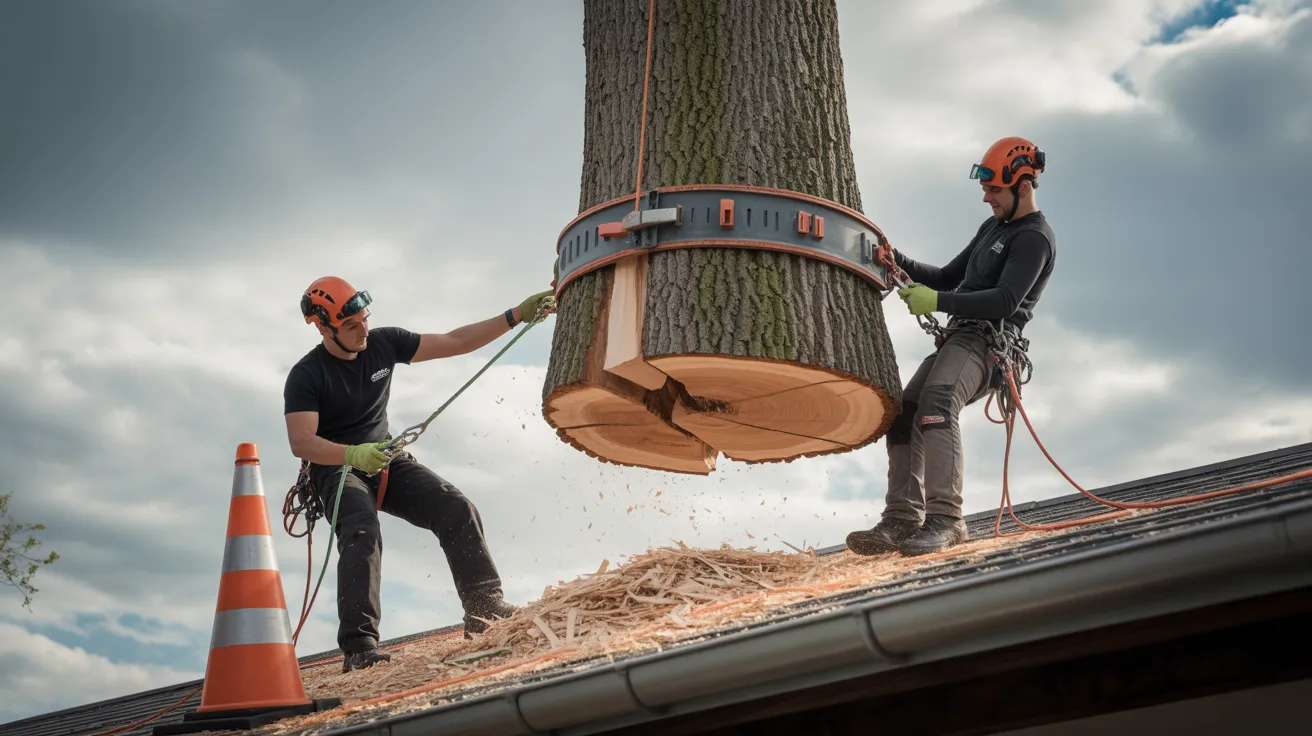
If pruning isn't sufficient to address structural defects, disease, or clearance concerns, removal is the safest option. We implement a comprehensive strategy, including site evaluation, rigging plans, and precise cutting methods to ensure property protection. Our certified professionals systematically remove trees piece by piece, utilizing professional-grade equipment, rope management systems, and control lines to manage descent paths. Utility verification is performed, create exclusion perimeters, and comply with ANSI Z133 and ISA BMPs to minimize safety risks.
Extracting stumps and roots concludes the process, preventing sucker growth and conflicts with foundations or utilities. We use specialized grinders designed for tight sites, and we fill with appropriate material to maintain grade. Materials are recycled when practical, and we maintain the location tidy and suitable for new plantings.
Emergency Weather Response and Safety Measures
When major storms hit Sarnia, you need rapid storm response that deploys certified crews, specialized tools, and traffic control promptly to stabilize affected areas. You should expect hazard assessment protocols that adhere to ISA and ANSI A300 standards: structural root and canopy inspections, structural stress evaluation, and infrastructure interference scanning. With these systematic approaches, you can decrease residual risk, identify urgent tree work, and secure area accessibility.
Rapid Storm Mobilization
When severe weather strikes, Parkhill Tree Service springs into action to stabilize affected areas, remove hazards, and restore access across Sarnia. Customers benefit from rapid response managed via a 24/7 dispatch, GPS-tracked fleet, and ready-to-deploy equipment. Teams arrive with essential equipment including insulated saws, rigging gear, traffic control kits, and chipper/loader units to open essential corridors and secure utilities.
You gain advantages from coordinated community response with public works, utilities, and emergency services to manage blocked arterials, downed conductors, and compromised trees affecting structures. Crews implement ICS-style roles, establish safety perimeters, and follow ANSI Z133 and provincial standards. They perform controlled dismantles, crane-assisted removal of large windfall, and material sorting for streamlined hauling. Documentation includes dated visual evidence, chain-of-custody for materials, and detailed reports to assist with regulatory compliance and insurance verification.
Hazard Evaluation Standards
Even though workers respond swiftly, they never begin work until a comprehensive hazard assessment verifies the location is clear and priorities are clear. You'll observe a systematic process: establish exclusion zones, verify utility status, and secure traffic patterns. Workers complete risk mapping to identify stressed limbs, damaged stems, root-plate failures, and potential strike hazards.
They utilize calibrated rangefinders, clinometers, and thermal imagers to locate energized conductors and hidden stress. Stress patterns are evaluated to predict failure directions. Branch classification catalogs and sorts components by safety tier, pairing removal techniques to risk levels: controlled removal, mechanical assistance, or strategic cutting. You'll be given comprehensive reports, containing photos, hazard assessments, and safety recommendations. This approach decreases injury risk, avoids cascade failures, and reestablishes access with proven safety margins.
Stump Grinding and Site Restoration
Rehabilitating your outdoor space commences with exact stump grinding that prevents trip hazards, stops regrowth, and conditions the site for fresh landscaping. We set grinder depth to 6-12 inches below grade, aligning with species-specific root flare and site loads. You benefit from controlled debris management, guarded work zones, and confirmed utility mapping prior to removal.
Following the grinding process, we perform precise root removal to stop lateral sucker formation and resolve surface heave risks. We isolate chips from mineral soil to eliminate nitrogen drawdown, then restore with a classified aggregate-soil blend that promotes compaction and soil stabilization. Final grading achieves positive drainage and uniform subgrade tolerances. If you are considering hardscapes or replanting, we furnish compaction tests, amendment rates, and load-bearing recommendations so the reclaimed footprint performs safely and predictably over time.
Disease, Pest, and Soil Management Approaches
As tree health requires timely diagnosis and managed interventions, we combine assessment protocols, action points, and remedial steps into a complete treatment approach. We begin with thorough inspections, using fungal diagnostics, pheromone monitoring, and canopy analysis to verify diseases and insect presence. You get clear intervention thresholds that indicate when intervention is needed, avoiding unwarranted treatments.
We start by resolving soil deficiencies. We analyze pH, EC, CEC, and organic matter levels, then apply targeted amendments and verified soil inoculants to enhance root symbiosis and nutrient absorption. For addressing pest and disease issues, we implement selective pruning, cleanup, and labeled chemistries under IPM guidelines. We time applications according to life cycles, preserve beneficial organisms, and document effectiveness. You obtain detailed monitoring reports, follow-up assessment timelines, and updates based on measurable plant performance and site conditions.
Insurance Coverage, Equipment, and Safety Standards
Confirm the team uses professional-grade arborist equipment including climbing ropes, friction devices, calibrated chainsaws, and verified rigging gear. Ask for documented safety procedures meeting ANSI Z133 and CSA/OHS standards, covering protective gear, emergency response and detailed job hazard evaluations. Validate comprehensive liability and WSIB/worker's compensation coverage, and request certificates listing you as an additional insured before operations commence.
Top-Quality Tree Care Equipment
Trust Parkhill Tree Service to utilize industry-leading arborist equipment calibrated for precision and safety. You get access to high reach aerial lifts with insulated booms, surface-friendly outriggers, and load monitoring to prevent overcapacity events. Crews use GPS guided fleet tracking to position equipment efficiently and decrease idle time on-site. Chain saws feature inertia-activated chain brakes and low-kickback bars, while lifting equipment carries traceable ratings that align with calculated forces. Machinery is maintained to OEM specs; chipper performance is validated through knife clearance checks, component positioning, and power system verification. Stump grinders run guarding and emergency stops verified per CSA standards. Parkhill maintains active liability and WSIB coverage, and documents pre-job inspections, maintenance intervals, and calibration reports to maintain certification and secure your property.
Advanced Safety Standards
Regularly, Parkhill Tree Service maintains a detailed safety program that incorporates technical safeguards, validated tools, and verified insurance coverage. You benefit from a developed safety culture that establishes job hazard analyses, operational planning sessions, and task allocations. Crews utilize protective equipment appropriate for job-related hazards, follow lockout tagout for energized tools and chippers, and install worksite signage to regulate public and traffic interfaces. Supervisors oversee incident reporting and near miss tracking to implement corrective actions and measurable trend reduction. You'll see calibrated devices, compliant rigging, and equipment verification checks documented before mobilization. Field teams comply with industry regulations, with ongoing education on fall protection, high-angle rescue, and electrical proximity. Documentation is compliance-verified, time-stamped, and verified at each phase.
Comprehensive Liability Insurance
Although no two jobs share identical risks, Parkhill Tree Service supports each job with comprehensive liability insurance that aligns perfectly with its engineered safety controls and certified equipment. Clients obtain protection that addresses real-world field hazards-encompassing rigging loads, aerial lift operations, chipper exposure, and traffic control interfaces. We establish clear policy limits for property damage, bodily injury, and completed operations, matching safety evaluations performed before project mobilization.
Our insurance complements CSA-compliant PPE, periodic safety checks, and operational permits, covering aspects that self-insurance doesn't cover. You'll receive certificates of insurance upon request, outlining endorsements, additional insured status, and waiver of subrogation where necessary. If an incident occurs, our streamlined claims process records accountability sequence, timestamps, and event factors, expediting resolution while protecting your project timeline and cost certainty.
Upfront Pricing, Booking, and Maintenance Programs
Because clear information reduces risk and surprises, Parkhill Tree Service delivers comprehensive, breakdown pricing that detail work scope, techniques, machinery, waste removal, traffic provisions, and required permits before commencing operations. You receive clear cost breakdowns tied to measurable outputs-DBH, canopy spread, access constraints, and utility proximity-so you can evaluate alternatives and see what affects pricing. We document ANSI A300 practices, PPE, and exclusion zones in your project documentation.
We'll provide a confirmed schedule window, advance service alerts, and alternative solutions for weather-related issues or utility interruptions. Crews arrive with calibrated gear and finished safety protocols. Following the service, we deliver a detailed report with documentation and suggestions. To maintain healthy trees and lower the risk of issues, we provide ongoing maintenance plans with recurring inspections, periodic pruning, pest control checks, ground maintenance, and cost planning.
Common Inquiries
Do You Offer Eco-Friendly Disposal or Wood Recycling Options for Removed Trees?
Yes, we offer eco-friendly disposal and wood recycling options. We sort logs, branches, and chips for repurposing: processing into lumber, mulch production, or biomass fuel. Where appropriate, we leave select logs or brush piles for wildlife habitat, complying with city guidelines and invasive plant protocols. We sanitize our tools to stop disease transmission and supply detailed tracking documentation. You'll get clear disposal plans, load weights, and site safety measures aligned with industry standards and best practices.
Can I Keep the Wood Chips or Logs for Personal Use?
Yes, absolutely, you can maintain wood chips and logs. It's a game-changer for your property. Apply chips as yard mulch; they stabilize soil temperature, suppress weeds, and conserve moisture. Allow chips to decompose 3-6 months to avoid nitrogen drawdown. For logs, implement safe firewood storage: split them for faster seasoning, elevate the stack, shield only the top, confirm 15-20% moisture (use a meter), and position woodpiles 6-10 feet from structures to reduce pest and fire risk.
Can You Tell Me About Your Seasonal Discounts and Referral Programs?
Absolutely. You'll typically find seasonal special offers during slower times (between seasons) for pruning, removals, and stump grinding. Request written conditions, eligible services, and blackout dates to ensure safety-critical tasks are done properly. Many providers also offer referral bonuses-typically a fixed credit or percentage discount-after the referred customer's service is completed and paid. Confirm limits per household, combination with other discounts, and expiration dates. Ensure all discounts appear on your final bill.
Do You Offer Support for Municipal Permits and Bylaw Compliance Paperwork?
You receive complete permitting and regulatory guidance from initial contact to final closeout. We take care of determining relevant local regulations, handling paperwork, securing arborist reports, and submitting all applications. We organize necessary inspections, utility locates, and traffic management plans where necessary. You get comprehensive risk assessments, site maps, and pruning/removal documentation conforming to ISA and ANSI A300 standards. We manage permit status, maintain detailed records, and schedule work strictly following permit approval to maintain safety and legal compliance.
What Warranty or Satisfaction Guarantee Do You Offer on Services?
You receive a comprehensive service guarantee and a specific workmanship warranty on all completed tasks. We clearly detail warranty conditions in writing, including duration, exclusions, and corrective actions. Should issues emerge from our workmanship within the warranty period, we quickly respond, inspect issues, and fix to requirements at no cost. You receive post-service documentation, photos, and compliance notes to confirm results. Alert us to problems within stated timelines so we can investigate, mitigate risk, and fulfill warranty obligations quickly.
Wrapping Up
You could take chances with DIY chainsaws and guesswork, or you could count on Parkhill's certified arborists and depend on established guidelines handle the difficult work. You'll benefit from detailed risk assessments, ISA-standard pruning, accurate stump grinding, and covered removals that don't result in property damage. In emergency situations, you can expect rapid assistance, comprehensive strategies, and certified soil remediation. Simply put, you're investing in more than tree services - you're ensuring safety, compliance, and reliable outcomes.